
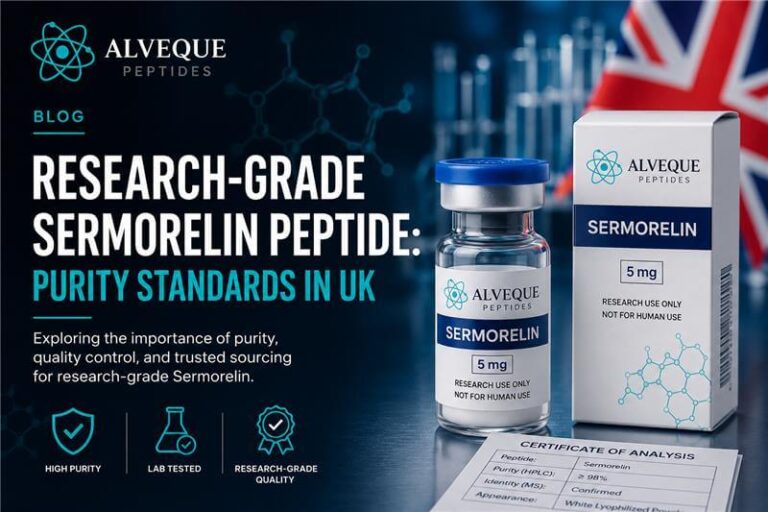
Sermorelin peptide (GRF 1-29) is a well-documented research compound widely used in preclinical studies involving growth hormone pathways. For UK laboratories, sourcing high-purity material is non-negotiable. Even minor impurities can skew experimental data, compromise reproducibility, and waste valuable time and resources.
This guide breaks down what “research-grade” truly means in practical terms. We cover step-by-step purity verification methods, key supplier evaluation criteria, and responsible procurement practices for teams looking to buy research peptides. Whether you explore peptides online or work with local distributors, clarity on quality standards supports stronger science.
When researchers buy sermorelin for laboratory use, documented purity and transparent sourcing make all the difference. This resource helps UK-based teams navigate those decisions with confidence. All content is intended strictly for scientific investigation. Nothing here endorses human or veterinary application.
Understanding Sermorelin (GRF 1-29) in Laboratory Settings
Molecular Profile and Research Applications
Sermorelin is a 29-amino-acid fragment of growth hormone-releasing hormone (GHRH).
In research, it helps scientists study:
- GHRH receptor binding kinetics
- Signal transduction pathways in pituitary cell lines
- Stability and formulation variables in lyophilised peptides
- Its defined structure makes it useful for assay development.
- It is not a therapeutic agent.
- It is a tool for controlled, hypothesis-driven investigation.
Why Purity Directly Impacts Data Integrity
Even minor contaminants can:
- Alter receptor binding results
- Trigger non-specific immune responses in cell cultures
- Interfere with HPLC or mass spectrometry readouts
That is why reputable suppliers provide:
- HPLC chromatograms (≥98–99% purity)
- Mass spectrometry confirmation
- Full Certificate of Analysis (CoA) per batch
When you buy sermorelin for lab work, always request these documents upfront.
Key Quality Indicators for Research-Grade Sermorelin
HPLC Verification and Certificate of Analysis
High-Performance Liquid Chromatography (HPLC) is the gold standard.
It separates compounds by chemical properties.
A clean, single peak at the expected retention time signals high purity.
A proper CoA should include:
- Batch number and manufacture date
- Purity percentage with method details
- Residual solvent and endotoxin limits
- Storage and reconstitution guidance
- Never accept a generic or templated CoA.
- Each batch must be individually tested.
Third-Party Testing and Batch Traceability
Independent lab verification adds a critical layer of confidence.
It reduces reliance on self-reported data.
Look for suppliers who:
- Publish third-party test results openly
- Assign unique batch IDs for full traceability
- Offer sample retention for repeat analysis
These practices support rigorous, auditable science.
They are especially important when teams choose to buy peptides online.
Evaluating UK Peptide Suppliers: What Researchers Should Check
-
Documentation Standards
- Transparency builds trust.
A credible supplier will make quality documents easy to access.
This includes CoAs, SDS (Safety Data Sheets), and handling protocols.
Avoid vendors who:
- Hide test reports behind login walls
- Use vague terms like “pharmaceutical grade” without proof
- Cannot explain their synthesis or purification methods
For research peptides UK buyers, documentation is your first filter.
Storage, Shipping and Handling Protocols
Peptides are sensitive to heat, light, and moisture.
Proper handling preserves integrity from lab to bench.
Check that your supplier:
- Ships lyophilised peptides with cold-chain options
- Uses desiccants and opaque, sealed vials
- Provides clear reconstitution instructions (e.g., sterile bacteriostatic water)
These details matter.
They protect your investment and your data.
Responsible Sourcing Considerations
Sourcing should align with institutional policies and legal frameworks.
In the UK, researchers must ensure compliance with MHRA guidance on unlicensed substances.
When you explore options to buy peptides online, prioritise:
- Clear “Research Use Only” labeling
- Age verification and institutional purchase pathways
- Responsive support for technical queries
Reputable platforms make compliance easy.
- They do not encourage off-label use.
- They support science, not speculation.
For teams seeking consistent quality, Alveque Peptides maintains rigorous documentation standards for all sermorelin peptide batches.
Remember: convenience should never override verification.
Always confirm purity, provenance, and protocol alignment before procurement.
Final Thoughts for UK Research Teams
High-quality sermorelin starts with high-standard sourcing.
Purity isn’t a marketing term.
It is a measurable, verifiable requirement.
By focusing on:
- Independent testing
- Transparent documentation
- Responsible handling
They also uphold the standards of UK science.
When you need reliable, research-grade materials, partner with suppliers who share that commitment.
Alveque Peptides is one such resource for UK-based laboratories prioritising quality and compliance.
Frequently Asked Questions
Q: What does “research-grade” mean for sermorelin peptide?
A. Research-grade sermorelin peptide is made only for lab use. It follows strict synthesis and testing protocols. Purity is typically 98% or higher. Each batch comes with a Certificate of Analysis. Clear handling instructions are always included. These materials are never for human or animal use. This standard helps keep science reliable and compliant.
Q: What should I know before sourcing tb500, pt141 uk, or mots-c peptide for research?
A. Compounds like tb500, pt141 uk, and mots-c peptide require compound-specific documentation. Each needs clear research justification and ethics alignment. When you buy research peptides, avoid generic templates. Choose suppliers who provide tailored support. If you plan to buy sermorelin or similar compounds, prioritise transparency and technical guidance. Context and chemistry both matter.
Q: Is sermorelin stable after reconstitution?
A. Lyophilised sermorelin stays stable for months at -20°C. Keep it sealed and away from light. After reconstitution, use it within a few days. Store the solution at 2–8°C. Follow the supplier’s protocol exactly. Avoid freeze-thaw cycles. Proper care protects your results, whether you buy peptides online or locally.
Q: Can I use sermorelin in cell culture studies?
A. Yes, many labs use it for GHRH receptor studies in vitro. Include proper controls in your design. Check solubility and endotoxin levels first. Use sterile technique at every step. These precautions help ensure clean, interpretable data. When you buy research peptides, confirm compatibility with your assay system early.
Q: What documentation should I keep for institutional compliance?
A. Save the batch Certificate of Analysis and your purchase order. Log storage conditions and handling dates. Include any required risk assessments or ethics approvals. This paperwork supports audits and reproducibility. Good records matter whether you source peptides online or through traditional channels.
Q: How does sermorelin differ from other GHRH analogs in research?
A. Sermorelin (GRF 1-29) is the active N-terminal fragment of GHRH. It has a shorter half-life than the full hormone. This makes it useful for kinetic and binding studies. It lacks C-terminal modifications found in other analogs. These differences affect experimental design and interpretation. Choose the right tool for your specific research question.
Q: Are tesamorelin peptide or ghk-cu peptide handled with similar quality standards?
A. Yes. Compounds like tesamorelin peptide and ghk-cu peptide also need strict purity checks. Each has unique stability and handling needs. Always review compound-specific Certificates of Analysis. Follow storage guidance tailored to each peptide. Never swap protocols between compounds. This care supports reliable results across all research peptides UK projects.
If you still have any questions, please read this FAQ page – https://alvequepeptides.com/faq/
Disclaimer: All products referenced are for laboratory research use only. Not for human or animal consumption. Researchers are responsible for compliance with local regulations, institutional policies, and ethical guidelines.